 I don’t know if many of you know this, but Microsoft was ahead of its time with the Surface Phone/Andromeda. When the first patents came out it was supposed to be more than a phone and further patents talked about a foldable phone. That was before ZTE Axon M, the Samsung, LG, Huawei and Oppo patents. But the device is still not out, which doesn’t stop designers from envisioning it. Concept Creator rendered the Surface Phone anew, with some novelty associated with the latest Andromeda patents. The project was in limbo last summer and we haven’t heard about it since. The new renders depict a rather bulky and thick device, with a reinforced hinge. The unified screen portion is seamless and we also get two external displays. There’s a bit of Lumia and Surface Pro DNA here and I’m guessing some magnesium alloy too. The hinge area now seems coated with a sort of rubbery material, perhaps to decrease friction. That adds to the thickness, though. The inner screen bezels are rather larger, but the outer screens have very narrow bezels, so that checks out. My only beef with the concept is that the two screens don’t overlap perfectly when closed. But then again, it may be intentional, leaving room for you to open the gizmo. I also can’t seem to spot any camera. If the device comes this year, it’ll arrive either at BUILD in April or May or November, like the last Lumias and Surface units. For more visit OUR FORUM.  Following a partial U.S. government shutdown caused by a deadlock on the issue of the Mexican border wall between the Democratic Party and Donald Trump, tens of government websites can no longer be accessed or have become insecure because their TLS certificates have not been renewed. The websites of the U.S. Department of Justice, NASA, and the Court of Appeals are some of the ones hit by the government's failure to extend around 80 TLS certificates used on .gov domains. .gov websites with expired certificates on the HSTS preload list now inaccessible One of the websites affected by this mishap is Department of Justice's ows2.usdoj.gov, which displays an error message warning visitors that the connection is not private or secure, depending on the used web browsers. To make things worse, because ows2.usdoj.gov is also on Chromium's HTTP Strict Transport Security (HSTS) preload list, the website will not be accessible given that both Google Chrome and Mozilla Firefox will automatically hide the button allowing users to temporarily ignore the warning and open the website. Furthermore, seeing that most other web browsers also use their own HSTS preload lists based on the Chrome one, there is nothing users can do to load the .gov websites temporarily broken by the expired TLS certificates. The government sites not on the HSTS preload list will open after users click on the 'Advanced" button at the end of the warning and choose to proceed, but there are risks involved in doing that. Check out OUR FORUM for more. 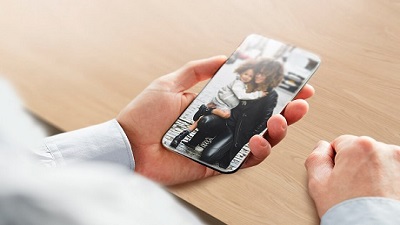 A modern smartphone needs more than a front-facing camera in facing the user. In fact, the most common front-facing sensor is the light and proximity sensor, and now a major Apple iPhone supplier has created the technology which allows this sensor to be buried behind the screen. ams, a leading worldwide Austrian supplier of high-performance sensor solutions announced the release of the TCS3701, an RGB light and IR proximity sensor IC which can accurately measure the intensity of ambient light from behind an OLED screen. This capability supports today’s industrial design trend to maximize smartphone display area by eliminating front-facing bezels, where an ambient light/proximity sensor is typically located. By developing this ‘Behind OLED’ ambient light/proximity sensor, ams enables smartphone manufacturers to achieve the highest possible ratio of the display area to body size while retaining crucial touchscreen disablement and automatic display brightness/color adjustment functions, which require an RGB/infrared light sensor. Despite the constraint of operating behind an emissive OLED display screen, the TCS3701 senses the addition of the ambient light passing through the display to light emitted by the display’s pixels located just above the sensor. ams has developed unique algorithms which enable accurate detection of ambient light levels without knowledge of the display pixel brightness above the sensor. Light transmission through an OLED screen is limited by its opacity, but the TCS3701’s ultra-high sensitivity to light means that it can still produce accurate light measurements in all lighting conditions. Read more on OUR FORUM. |
Latest Articles
|