 The EU Copyright Directive has made a lot of waves lately given that many fear that some of its provisions will lead to increased censorship, with almost 4.5 million Europeans signing a change.org petition to stop Article 13. This article was the one that attracted almost everyone's attention seeing that it will require large online platforms such as Google, Facebook, Twitter, and YouTube to always keep an eye out on what their users are uploading and block all copyrighted items such as videos, images, and text. The other controversial article part of the EU Copyright Directive is Article 11, a provision which will force news aggregators to pay the copyright holders a fee for every news item they link to. Google, one of the most heated critics of the two provisions, is now testing a new search engine results page (SERP) template where the EU Copyright Directive is applied to the listed search results "to understand what the impact of the proposed EU Copyright Directive would be to our users and publisher partners," according to Search Engine Land. EU Copyright Directive will turn SERPs into a ghost town according to Google. As the SERP screenshots show, Google's search results will look like a deserted town, with no article titles, no images, and no news summaries, or "like pages that have failed to completely load" as Search Engine Land's Greg Sterling very appropriately describes them. Learn more on OUR FORUM.  During this year’s recent CES conference in Las Vegas, attendees got a preview of the evolution of high-speed internet. It's called LiFiMAX and offers an internet connection based on invisible light. It gives a 100Mbps downlink data rate and 40Mpbs uplink rate, making it ideal for use in a professional setting. Also, since LiFiMAX offers internet without radio waves, it's a good fit for industrial environments that are sensitive to them, or for people who believe they feel negative health consequences due to radio wave exposure. At CES, there was a LiFiMAX presentation during one of the conference days, as well as on-demand demos throughout the event. As such, people could learn about technology and how it works. But, even if people weren't at CES, the LiFiMAX concept is pioneering enough to make people curious. This innovation is the latest offering from Oledcomm, a company that is not new to the idea of using light to help people connect. Oledcomm also rolled out the My LiFi lamp before this invention came on the market. It's a light for households, and as well as providing internet access, users can change the intensity of the output depending on the time of day, such as if they want bright light in the mornings to help them wake up, or dimmer illumination at night to help them wind down. As for the LiFiMAX, the most suitable use seems to be in a conference room or a coworking space. That's because the gadget offers an internet connection to 16 people at once. Follow this thread and more on OUR FORUM. 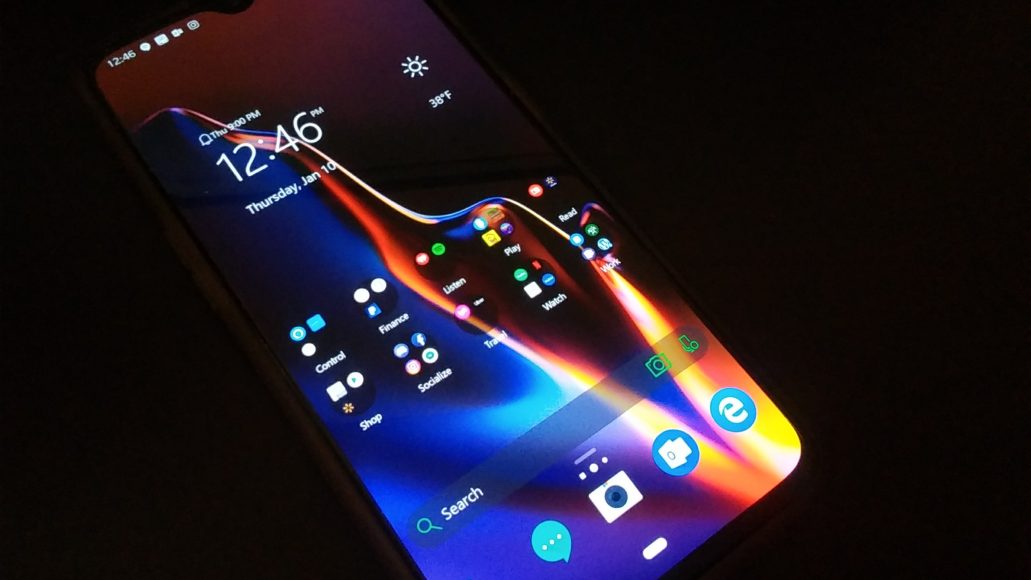 Ever since Microsoft discontinued its efforts on its Windows 10 Mobile platform, many former users have moved to other platforms, namely iPhone and Android. Because of this, Microsoft has refocused its efforts to these systems, building new apps to bring their ecosystem to those platforms. Over time, Microsoft pushed out what used to be Windows 10 Mobile exclusives, including Edge and Cortana, over to the iOS and Android platforms. While the company isn’t leaving the many proud iPhone users out of the equation given its releases of Edge and Cortana for that platform, it’s clear Android users will be able to make themselves feel even more at home to Microsoft’s services. This is because the company can virtually bake its services into those phones by installing a simple app: Microsoft Launcher. Originally known as Arrow Launcher, the home screen app started as a Microsoft Garage project and has since been rebranded to become the central hub for users to use Bing, Cortana, and Microsoft News. Microsoft has taken features in Windows 10, such as Cortana, Timeline, more recently Sticky Notes, and brought them to Android thanks to this one app. Below are some of likely the most useful features you get with Microsoft Launcher over the stock version that likely comes with your phone. Timeline first came to Windows 10 in the April 2018 Update as a way for users to easily jump from one PC to the next by syncing recently viewed activities. More can be found on OUR FORUM. |
Latest Articles
|