 Today Volkswagen and Microsoft announced a strategic partnership which would see Volkswagen build all in-car services for vehicles of the core Volkswagen brand as well as the Group-wide cloud-based platform on Microsoft technology. Together, the two companies will develop the technological basis for a comprehensive industrial automotive cloud. In the future, all in-car services for vehicles of the core Volkswagen brand as well as the Group-wide cloud-based platform (also known as One Digital Platform, ODP) will be built on Microsoft’s Azure cloud platform and services as well as Azure IoT Edge. From 2020 onwards, more than 5 million new Volkswagen brand vehicles per year will be fully connected and will be part of the Internet of Things (IoT) in the cloud. “The strategic partnership with Microsoft will turbocharge our digital transformation,” said Dr. Herbert Diess, CEO of Volkswagen AG. “Volkswagen, as one of the world’s largest automakers, and Microsoft, with its unique technological expertise, are outstandingly well-matched. Together, we will play a key role in shaping the future of auto-mobility.” By building the Volkswagen Automotive Cloud, Volkswagen will be able to leverage consistent mobility services across its entire portfolio and to provide new services and solutions such as in-car consumer experiences, telematics, and securely connect data between the car and the cloud. We have more posted on OUR FORUM.  Facebook has admitted having a “security issue” with nearly 50 million accounts which had their “access tokens” compromised. The social media giant has reset tokens for another 40 million accounts as a “precaution.” The issue affected nearly 50 million accounts, which would require users to re-enter their passwords. The security issue was discovered by the company’s engineers on Tuesday. Hackers have been apparently able to fetch the so-called “access tokens” – digital keys, which allow a user to stay logged into Facebook and to not re-enter their passwords each time they use the application. “Our investigation is still in its early stages. But it's clear that attackers exploited a vulnerability in Facebook's code that impacted "View As", a feature that lets people see what their own profile looks like to someone else,” the tech giant said in a statement. The vulnerability has been already fixed, according to Facebook, and the “View As” feature has been temporarily disabled. “This attack exploited the complex interaction of multiple issues in our code. It stemmed from a change we made to our video uploading feature in July 2017, which impacted "View As." The attackers not only needed to find this vulnerability and use it to get an access token, they then had to pivot from that account to others to steal more tokens,” Facebook stated. Damage done by the attack is yet to be evaluated, it remains unclear whether the affected accounts “were misused or any information accessed.” Source of the attack and who was behind it also remain unidentified, according to Facebook. 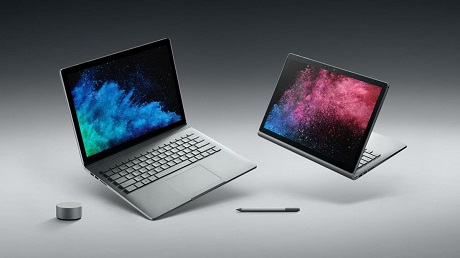 Microsoft Surface laptops are now eligible for “recommended” status in Consumer Reports’ ratings. Last year we removed that designation because of poor predicted reliability in comparison with laptops from other brands. Reliability evaluations are based on surveys of our members. We now have results from our latest survey. “Microsoft’s reliability is now on par with most other laptop brands,” allowing its products to be recommended, says Martin Lachter, a senior research associate at Consumer Reports. This is the first year that brand reliability is being factored into the Overall Scores for many products rated by Consumer Reports. Owner satisfaction, which is based on the same survey of our members, is also being incorporated into the Overall Score. The new reliability scores are ready just as we’ve completed our lab testing of the recently released Microsoft Surface Go. That 10-inch Surface Go, released in August, is meant to be a two-in-one laptop, though a keyboard must be purchased separately. The Surface Go isn’t receiving a CR recommendation, but that’s based on the results of lab testing, not member survey data. The Surface Go is the only Surface that isn’t getting a recommendation; the company’s other models, including the Surface Pro, Surface Laptop, and Surface Book 2, do score well enough to be recommended. (Based on feedback from Microsoft, we are testing and rating these devices as laptops; last year we considered some Surface products separately as laptops and as tablets.) Learn more by visiting OUR FORUM. |
Latest Articles
|