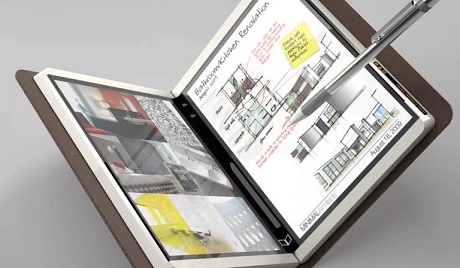
 The definition of computing is changing day by day. One of the earliest sections to adopt this change is the education market, where Microsoft had the dominance in the 90s and early 2000s. But after the introduction of Chromebook, education sectors have switched to it because of the low cost, easy to use, durable PCs which Microsoft and their OEMs do not have. As a result, we have seen that Microsoft is working on different types of devices in search of new usage scenarios for PCs to grab all the possible markets. Andromeda is an open secret now. But in recent leaks, a new device code-name is floating around- ‘Centaurus’. Unlike the pocketable Andromeda, this is a more tablet-like dual-screen device which may run on Windows Core OS, a lightweight, easy to use, flexible version of Windows operating system. This operating system is being made to compete with Chrome OS like lightweight operating systems. As the dual screen foldable computers are very expensive to produce, it will be a bit risky for the market. That’s why Microsoft is trying to make the technology less expensive and perfect to find an appropriate place for the new PC form factor by experimenting with different type of devices at once. Currently, Microsoft is very successful with touch, pen and e-ink enabled computing devices. Microsoft apps (like OneNote, Office apps etc) which support such technologies are very successful even in education sectors. Learn more on OUR FORUM. 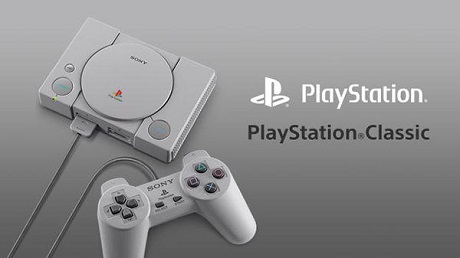 24 years after the release of the original PlayStation, the PlayStation Classic has arrived, although not to fanfare or critical acclaim. It turns out that despite being more powerful than its full-sized counterpart, the PlayStation Classic is an example of how newer things aren’t always better. Digital Foundry report that, while an attractive package on the outside (complete with 3 fully working buttons on the actual console and a controller that resembles the original non-DualShock controller), the Classic just isn’t good on the inside. Sure, the game selection on offer is interesting and full of decent titles, but any positives of the console are weighed down by the negatives. The classic is limited to 720p output but has no filters, scanlines, or adjustments available. It’s also locked to RGB full range. When you first start up a game, you’ll be instantly hit by several display issues – most notably, the image quality is extremely blurry as a result of poor scaling and heavy filtering. It doesn’t help that 9 of the available games are the PAL versions, meaning that they run slower and tend to lag during gameplay. There are also audio issues galore – the music randomly slows down during parts of Final Fantasy 7 and Ridge Racer Type 4 randomly has sudden glaring. There is more posted on OUR FORUM. 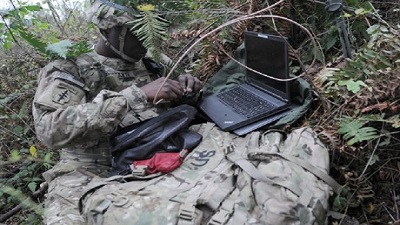 As tech companies such as Google wrestle with employee objections to working with the U.S. military, Microsoft Corp.’s president is throwing his company’s support behind the Pentagon. Microsoft is “going to provide the U.S. military with access to the best technology … all the technology we create. Full stop,” Brad Smith said Saturday during a panel at the Reagan National Defense Forum at the Ronald Reagan Presidential Library in Simi Valley. Smith acknowledged that “there is some angst” in some workforces, including Microsoft’s, about tech companies’ involvement in military contracts. In June, after thousands of employees voiced objections to a contract that allowed the military to use Google’s artificial intelligence tools to analyze drone footage, Google decided not to renew the contract. Smith said he wanted to quell such concerns. “We want Silicon Valley to know just how ethical and honorable a tradition the military has,” he said. The future and use of artificial intelligence and autonomous systems have broad implications, he said, and are “of importance to everybody and not just young people who happen to live on the West Coast.” Smith expressed openness to hearing his workers’ opinions, saying that Microsoft would “engage to address the ethical issues that new technology is creating.” He recalled an email he had received from an employee who grew up in Belgrade, Serbia — which was bombed by NATO forces in 1999 — that said the employee needed to think through Microsoft’s reasoning for working with military contracts. Smith said he understood the employee's background would lead to such hesitation. But he did not mention Microsoft taking any action or changing any policy as a result. Other tech industry executives pushed back against the idea that Silicon Valley workers are less inclined to work with the Defense Department solely because of cultural differences or qualms about the moral implications. Read employee objections, an open letter to Microsoft, and more on OUR FORUM. |
Latest Articles
|