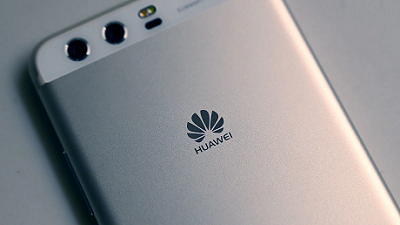
 According to a Wall Street Journal report, the U.S. government officials are claiming Huawei, a phone and telecommunications company with ties to the Chinese government, has the ability to spy on users of mobile phone networks employing Huawei equipment. The claim comes after years of accusations from the U.S. government and repeated denials from Huawei. While Huawei is one of the largest sellers of phones in the world, its original business was building telecommunication networks. However, the U.S. has been wary of allowing Huawei equipment to be incorporated into U.S. telecommunications networks. A 2012 Congressional report effectively banned Huawei from selling the equipment and strongly discouraged U.S. phone companies from selling Huawei phones in their stores. The U.S. wariness comes from concerns regarding Huawei’s ties to the Chinese government—its founder is former Chinese military—and good old-fashioned protectionism. The company has been well positioned provided equipment for the roll-out of affordable and fast 5G networks. “There is no question in my mind that the extra scrutiny Huawei has been under as of late has to do with the political environment between China and the U.S. as well as the high-stakes around AI and 5G,” Lynette Ong, associate professor of Political Science at the University of Toronto, told me via email last year. Ong specializes in Chinese politics and political economy. Last year the U.S. and Huawei traded barbs over the U.S.’s concerns and Huawei’s alleged spying, fraud, and violation of international sanctions against Iran. The furor led to both Australia and New Zealand banning the use of Huawei equipment in telecommunication networks. However some of the largest telecommunication networks in the world, including ones owned by U.K. based Vodafone, and the German Deutsche Telekom AG, currently incorporate Huawei equipment. U.S. officials now claim Huawei has included backdoors into the equipment that effectively allows it to access the same data law enforcement can access. Typically these backdoors, known as “lawful interception interfaces” are used exclusively by law enforcement who must provide warrants to gain access. The equivalent of the old school wiretap, these lawful interception interfaces gives the user of the interface access to any data transmitted over the network, including phone calls and text messages. Looking for more, visit OUR FORUM.  At least four more major participants pulled out of MWC 2020 over the weekend, while restrictions on visitors from China have been tightened. Amazon, Nvidia, Sony, and Viavi have now all confirmed they’ve decided the risk of coronavirus infection is too great for them to allow their formal presence to go ahead. Here are their statements. Amazon: “Due to the outbreak and continued concerns about novel coronavirus, Amazon will withdraw from exhibiting and participating in Mobile World Congress 2020, scheduled for Feb. 24-27 in Barcelona, Spain.” Nvidia: “We’ve informed GSMA, the organizers of MWC Barcelona, that we won’t be sending our employees to this year’s event. Given public health risks around the coronavirus, ensuring the safety of our colleagues, partners, and customers is our highest concern. “MWC Barcelona is one of the world’s most important technology conferences. We’ve been looking forward to sharing our work in AI, 5G, and vRAN with the industry. We regret not attending, but I believe this is the right decision. We’re grateful for GSMA’s leadership and continued efforts to ensure the safety of all attendees.” Sony: “Sony has been closely monitoring the evolving situation following the novel coronavirus outbreak, which was declared a global emergency by the World Health Organization on January 30th, 2020. As we place the utmost importance on the safety and wellbeing of our customers, partners, media, and employees, we have taken the difficult decision to withdraw from exhibiting and participating at MWC 2020 in Barcelona, Spain. “The Sony press conference will now instead take place at the scheduled time of 8:30 am (CET) on February 24, 2020, as a video via our official Xperia YouTube channel to share our exciting product news. Sony would like to thank everyone for their understanding and ongoing support during these challenging times.” Viavi: “After reviewing all available data, VIAVI has chosen to cancel participation in this year’s Mobile World Congress in Barcelona out of an abundance of caution and concern for our employees, customers, and partners.” There are rumors of other cancellations, but none confirmed at the time of writing. Cnet reports that Samsung is still exhibiting, but is acting to protect just its senior execs, which isn’t a great look if it’s true. We asked Samsung for comment and were told that, while there is no official statement, the company is still attending. Keep up to date by visiting OUR FORUM often.  Updating your devices to the latest version of Windows 10 only to discover that your sound and WiFi has stopped working is nothing short of a nightmare. Unfortunately, Windows 10’s monthly updates have been consistently running into such problems and Microsoft’s operating system hasn’t been in a positive light lately. Windows 10 KB4532695 is the latest update that many users installed in a bid to fix File Explorer’s broken search bar, but it reportedly includes a whole raft of other flaws. The problematic update, which was released in late January, is now breaking down even more PCs and causing performance issues. Initially, it appeared that Blue Screen of Death (BSOD) is only hitting a small set of computers, but the problem appears to be widespread now. Several users in our comment section and Microsoft’s forum are pointing the blame at KB4532695 for a Blue Screen of Death (complete crash of the PC) with a critical error message and different stop codes. Users are now also reporting a complete boot failure and significant performance slowdown, which suggests that there are some very nasty gremlins in the works. “Had this exact issue with my PC. Was causing absolute havoc. Couldn’t access the BIOS, couldn’t even get it to install a fresh install of Windows as the system locked and would get stuck in a boot cycle. By some miracle, it booted up randomly on its literal millionth attempt and I restored back to before the update. Hey presto, problem solved,” one user wrote in our comment section. If you have a computer with Sound Blaster (sound cards), installing January optional update could disable it, according to multiple reports. “Soundblaster was working fine and after installing this update is not working anymore. The sound is passing through the motherboard drive (Realtek) instead of Soundblaster. Managed to fix it by setting the sound under Realtek… but Soundblaster is basically useless,” a user said. Some Windows 10 owners with other sound cards are also experiencing audio issues, so it’s possible that the update is not compatible with certain versions of adapters. And there are complaints that Windows 10 KB4532695 fails to install with generic error messages. According to a system administrator, Windows 10 may have lost track of where .NET are installed and disabling the feature before installing the patch resolves the installation problems. Follow this on OUR FORUM.
|
Latest Articles
|