 Facing the US government suppression, China's technology giant Huawei has reshuffled its business structure since late 2019, investing more resources in software innovation to become a top provider of smart digital solutions to help strengthen a broad variety of Chinese enterprises - industrial manufacturers, public utilities, internet-based platforms, financial service providers, catering and entertaining businesses. Huawei's forced business transformation, ironic in the eyes of many Western industrial analysts, is instrumental to enhancing the global competitiveness of Chinese companies, while make itself even more a formidable ICT hardware and software technology colossal, enabling it to stand shoulder-to-shoulder with Google, Apple, Microsoft and other global technology leaders. Armed with Huawei's state-of-the art integrated digital solutions - borne from the company's advanced 5G, cloud and AI technologies, Chinese businesses across a wide spectrum of industrial lines are poised to gain in the level of technology upgrade, corporate governing efficiency and business profitability. Huawei has worked out a plan to make new inroads into expanding its enterprise business sector, in addition to its mobile telecom gear and consumer devices business, and the enterprise business helped the company win more than 100 billion ($15 billion) of business revenue in 2020, growing 23 percent from 2019. At the end of 2020, the company had over 30,000 corporate partners in China. And, more than 19,000 other partners have joined Huawei Cloud Partners program. It is believed that a thriving technology ecosystem centered on Huawei's smart solutions will thrust many Chinese businesses to a new level of modernization, which will enable them to better compete with rivals from the US and other developed economies. At a time when US President Joe Biden refuses to abandon his predecessor Donald Trump's notorious trade and technology war, obsessively chanting his slogan to engage in a "fierce competition" with China, the strategy switch of Huawei and other leading tech companies in China is expected to keep in lockstep with the Chinese central government's new pivot to the "Dual Circulation" economic growth, by focusing on domestic market expansion, and, at the same time supplemented with exploration of overseas markets. The former Trump administration, concerned about the rising capability of Huawei, imposed very strict restrictions on the company by putting it on US government's Entity List in middle 2019, banning export of all advanced semiconductor chips and other technologies to Huawei. In 2020, Huawei was forced to spin off the Honor phone business, and the production of other advanced Huawei smart phones, tablets and digital devices was largely impaired, leading to withering sales and market shares both at home and abroad. But the technology giant won't cower to the US' reckless crackdown. Realizing the world's leading semiconductor makers are forbidden by Washington to manufacture semiconductor chips for the company, Huawei decided to shift to explore new frontiers of technology. Thanks to its strong financial fundamentals, Huawei has invested heavily in recruiting thousands of talented people, who are driving new technology innovations. And, the company's efforts have led to "pops" in new technologies, which will help Huawei to garner streams of new revenues in the coming months and years. Lately, Huawei has officially launched its Harmony or Hongmeng operating system which is expected to be embedded with more than 300 million digital consumer devices in 2021, mostly in China's mainland market. The integrated software system, connecting smart phones, laptops, tablets, smart TV sets, other home appliances and the inner-car screens and more, is innovated for the upcoming new era of "Internet of Things (IOT)". For more please visit OUR FORUM.  THE RANSOMWARE PROBLEM isn't getting any better. In fact, it's poised to get even worse, as cybercriminals have begun experimenting with double-encryption ransomware attacks. That works pretty much exactly how it sounds; victims pay a ransom to decrypt their files, only to find that they've been encrypted by another strain of malware simultaneously. It's a dirty trick, but if recent weeks have shown anything, it's that there's no low to which these groups won't stop. In more upbeat news, Google held its annual IO developer's conference this week. Amid the holograms and Wear OS overhauls the company detailed some important changes to how Android treats your privacy. The upcoming Android 12 release will include a host of security and privacy features, including a dashboard that lets you track which apps are checking your camera, microphone, and location data and when they did. Google's still an advertising company at heart, but progress is progress. Microsoft this week finally announced an end-of-life plan for Internet Explorer, which, yes, is still kicking. We took a look at the security problems the once-ubiquitous browser has caused through the years and why it will continue to for some time. And have Captchas got you down? We took a look at why they've gotten harder in recent years and how you can better navigate those dastardly blurry blocks. Likewise, we've got you covered on getting rid of those annoying cookie pop-ups that hound you across the web. Lastly, make sure you set aside some time to read our in-depth feature on the 2011 RSA hack, a seminal moment in cybersecurity. The central participants—well, other than the Chinese spies behind the attack—are finally free of their nondisclosure agreements, and told their stories in full for the first time. And there's more! Each week we round up all the news WIRED didn’t cover in-depth. Click on the headlines to read the full stories, and stay safe out there. The Apple-Epic lawsuit has seen no shortage of fireworks this week, especially during Tim Cook's testimony Friday. But Apple senior vice president of software engineering Craig Federighi—he's the one with the great hair—also caused a stir when asked why the iOS App Store couldn't simply embrace the more open distribution model found on macOS. "Today, we have a level of malware on the Mac that we don’t find acceptable," Federighi said, adding that 130 types of malware had been found targeting Macs in the past year, some of them quite successful. The question of security has been central to Apple's argument that it can't open up iOS to third-party app stores. But the answer is more complicated than it might seem. Apple does have an App Store review process, but outside security experts have said it alone is insufficient to comprehensively thwart both sophisticated malware and entry-level scams. Court documents showed that one Apple executive said App Store security was like "bringing a plastic butter knife to a gunfight." Apple's best protections come from the iPhone itself, which is architected to minimize the damage malware can do if it manages to sneak in. Remember those new lows in ransomware we were just talking about? Here's one. A little over a week ago, the Conti ransomware gang hit Ireland's national health service, known as the HSE. The result has been chaos, with hospitals disrupted across the country and patient data dangled as extortion bait. This week, Conti said it would hand over the decryption key so that health care providers could get back to business—but still demanded a nearly $20 million ransom, threatening to sell or release that patient data if HSE didn't pay up. Read this in full on OUR FORUM. 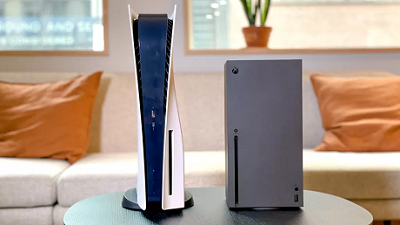 Whether you’re on the hunt for PS5 restock, Xbox Series X restock, or an Nvidia RTX 3080, you’ve probably had a pretty miserable time of it. Game consoles come and go within minutes, from retailers large and small. GPUs from Nvidia and AMD seem even scarcer, with enthusiasts camping out in front of stores, or simply paying exorbitant prices for third-party gear. On the one hand, we expect newly released electronics to be scarce. Eager early adopters almost always snatch up all available stock on a hot new gadget. But then, over time, the demand levels off, and the supply increases, and you can walk into any store and walk out with a smartphone, or a game console, or a computer part. And yet, gadget-hunting in 2021 feels different so far. More than six months later, finding a PS5 or Xbox Series X requires setting aside hours of your day to constantly refresh a page, and hoping against hope that scalper bots don’t steal a console right out of your shopping cart. GPUs like the Nvidia GeForce RTX 3080 and the AMD RX 6800 are even rarer, thanks to shady cryptocurrency miners. After all, who’s got time to play fun games when you can strike it rich with Dogecoin? Unfortunately, as 2021 continues, it’s beginning to look more and more like game consoles and GPUs won’t be widely available anytime soon, largely due to the worldwide semiconductor shortage. For the moment, high-end gaming systems are, essentially, rare luxury goods, instead of everyday consumer items. And the sooner we start viewing them as such, the happier we’ll all be. The reason why no one can find a PS5, Xbox Series X, or GPU is almost disappointingly prosaic. It’s because manufacturers can’t supply enough parts to get them built. Everything boils down to a type of computer component known as a semiconductor. To simplify things considerably, semiconductors help bridge the gap between metallic conductors and nonreactive insulators. They’re the reason why our electronics don’t short out from too much current or fail to function from a lack of current. In products that rely on sensitive computerized equipment — game consoles and GPUs, yes, but also cars, washing machines, and cameras — semiconductors are arguably as integral as the microchips themselves. At present, the whole world is living through a severe semiconductor shortage. If you guessed that it’s largely due to the COVID-19 pandemic, you guessed correctly. Many factories either shut down or didn’t run at full capacity, for quite some time last year. To exacerbate matters further, consumers didn’t buy much when the pandemic began, leading manufacturers to cut their semiconductor orders. Not only has demand outstripped supply; the supply itself is smaller than it really should have been. There are other reasons for the shortage, too, from then-president Donald Trump’s restrictions on the Chinese semiconductor trade to a fire at a Japanese manufacturing plant, to reduced global shipping causing bottlenecks. In other words, the semiconductor shortage is a perfect storm of public health, international relations, logistics, and bad luck. If you’ve been glued to Twitter, hoping against hope for the next PS5 restock, or perusing your local Best Buy every morning in hopes of an RTX 3080 resupply, you’re very well aware that the odds are against you. The demand for new gaming gear is huge; the supply of new gaming gear is extremely limited. The demand should decrease slightly as more and more people actually find the hardware they’re looking for. But with each new restock still selling out within minutes, it doesn’t seem like the situation is improving quickly enough to make a difference for most prospective buyers. At the risk of being the resident Tom’s Guide doomsayer, I don’t see the situation for PS5, Xbox Series X, or high-end GPUs improving much within the next few months. Readers have two options for dealing with this bad news. They can redouble their efforts, making our friend Matt Swider’s Twitter profile (which tracks console restocks day and night) into their homepage, setting up accounts at every major retailer in advance, keeping multiple machines glued to the Best Buy home page all day, and fighting off the thousands of other people in exactly the same position, every single day until something clicks. And, to be honest, if you treat finding a new console like a second job, you can probably secure one. It’s not hard; it’s just very tedious. More details are posted on OUR FORUM. |
Latest Articles
|